
1. Who holds the rights?
Identify the legal entity named on each relevant permit. Check the permitted area, activity, dates and current status. A project name and a company name may refer to different things; neither substitutes for verification of the underlying documents.
2. What has been verified on the ground?
Separate historical reports, exploration results and current fieldwork. Ask who collected the data, when it was collected and whether the findings can be independently checked. Do not treat an early technical concept as a current resource or reserve estimate.
3. Is the project technically and financially defined?
A credible plan should explain the proposed mining and processing method, infrastructure, costs, timetable and major uncertainties. Estimates should be labelled as estimates, with assumptions and evidence visible to qualified reviewers.
4. Who is responsible for delivery?
Identify the people and contractors responsible for geology, operations, finance and compliance. Experience in one area does not establish capability in every area. The delivery plan needs clear responsibilities, decision rights and reporting.
5. What must happen before investment?
List the remaining approvals, studies, agreements and funding requirements. Assign responsibility and a realistic sequence to each one. A serious review should leave investors knowing what is established and what is still conditional.
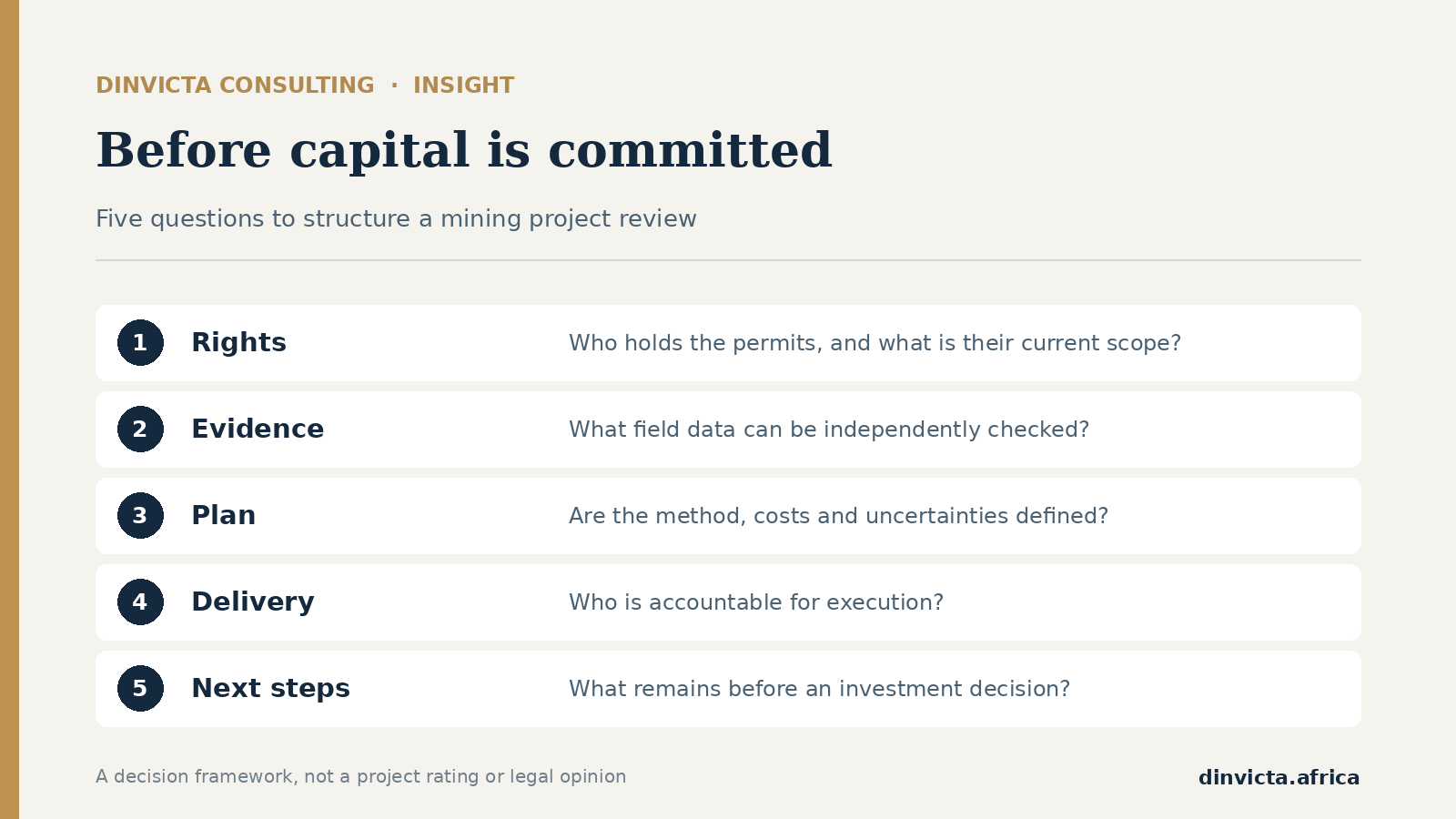
These questions do not guarantee a successful investment. They reveal what is established, what is assumed and what still needs work. That distinction is the foundation of a serious investment discussion.
This article is general commercial analysis, not an assessment of a specific licence or investment. Technical, legal and financial conclusions require qualified review of current source documents.